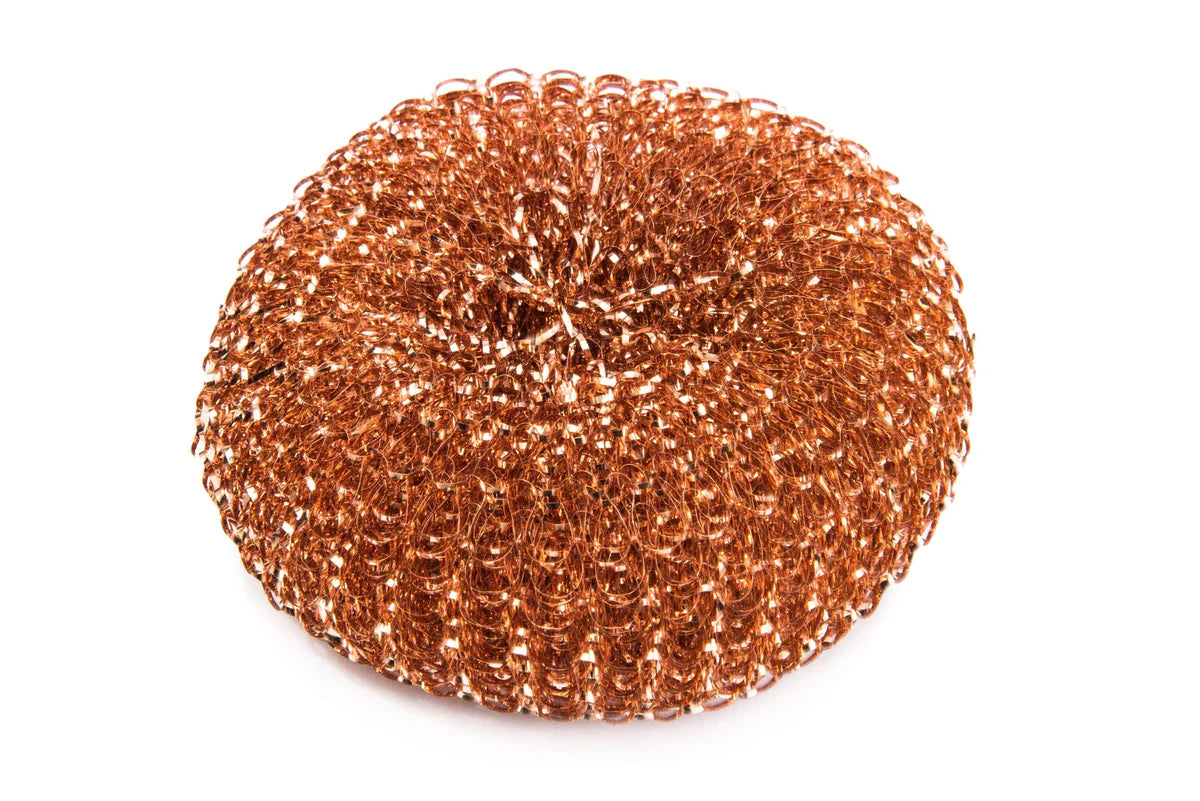
Copper Packing Catalytic Converter Mesh Scourer
Copper Packing Catalytic Converter Mesh Scourer
Couldn't load pickup availability
Advanced column packing for reflux and pot stills. Pure copper mesh removes
unwanted sulfur compounds (thiols) that create rotten egg or match strike
flavours during fermentation.Use inside your still column during distillation. The copper catalytically
converts sulfides in the vapour, producing cleaner, smoother spirits. Reusable
for 10–20 runs with proper care.Essential for reflux stills. Recommended for pot stills with columns. Takes
your spirits from "rough" to "refined."
Key Features
Key Features
- Pure lead-free copper – 100% pure; no brass or alloys
- Catalytic sulfide removal – Eliminates rotten egg / match strike flavours
- Pre-sized for easy installation – 7.5cm diameter × 3.5cm thick
- Reusable – Works for 10–20 distillation runs
- Improves proof – Cleaner vapour separation = higher ABV
- Works in reflux & pot stills – Flexible placement options
- Affordable – Better value than replacing copper wire strips
- Professional results – Makes spirits taste like "proper" distilled spirits
Specifications
Specifications
Material: 100% pure lead-free copper (no brass, zinc, or alloys)
Diameter: 7.5cm
Thickness: 3.5cm
Weight: Approximately 30–40g (depending on exact mesh density)
Shape: Pre-rolled mesh scourer
Mesh Type: Food-grade distillation-grade copper
Purity: ≥99.7% copper
Lead Content: Zero (lead-free certified)
Compatibility: Fits standard 2–3" diameter still columns
Reusable Lifespan: 10–20 distillation runs (with cleaning)
Operating Temperature: Up to 200°C+ (boiling/vapour contact)
Pressure Rating: Suitable for atmospheric pressure stills
Use Cases / Applications
Use Cases / Applications
PROBLEM: Sulfides (Thiols) from Fermentation
- Cause rotten egg smell
- Create match strike flavour
- Make spirits taste "harsh" or "off"
- Worse with certain yeasts (wild, bread yeasts, etc.)
SOLUTION: Copper Packing
- Vapour passes through copper during distillation
- Copper reacts with sulfur compounds in the vapour
- Sulfides bind to the copper surface
- Exit distillate is clean, smooth, and refined
WHEN TO USE:
- All reflux distillations (especially recommended)
- Pot stills with a column section
- After any fermentation with sulfide-prone yeasts
- When your spirits smell or taste "off"
- For final refinement to professional taste/smoothness
BEFORE & AFTER:
- Without copper: Spirits smell/taste like rotten eggs or matches
- With copper: Spirits are clean, smooth, drinkable
- Improves ABV purity: Better separation = higher proof spirit
Compatibility / Works With
Compatibility / Works With
Works with:
- VEVOR 4L Water Distillers (stainless or copper models)
- FermZilla All Rounder Still
- Reflux column stills (2–3" diameter)
- Pot stills with column sections
- DIY stainless steel columns
- Any still that allows internal packing
Pairs with:
- 2400W Power Controller (for temperature control)
- Thermowells (for monitoring column temperature)
- Silicone tubing (for condenser connections)
- Thermowell + temperature controller (for reflux control)
- Essential oils & alcohol distillations (where legal)
Compatible with all fermentation types:
- Grain washes (UJSSM, FFV, all-grain)
- Fruit ferments (sugar, honey, fruit juice)
- High-ester yeasts (prone to sulfides)
- Ale/bread yeasts (high sulfide risk)
- Wild ferments (unpredictable sulfides)
Does NOT require:
- Special equipment
- Replacement parts
- Proprietary components
- Additional chemicals (just vinegar for cleaning)
FAQ
FAQ
Q: How does this remove sulfides?
A: As vapour passes through the copper mesh during distillation, volatile
sulfur compounds (thiols) chemically bind to the copper surface. These
copper sulfides are insoluble and stay trapped on the mesh. Clean vapour
passes through to the condenser. Result: smooth, clean distillate.
Q: Will it work in my reflux still?
A: Yes. Reflux stills are the ideal application. Place it in the column
section where vapour rises. Don't pack too tightly (must maintain
vapour flow).
Q: Can I use it in a pot still?
A: Yes, if your pot still has a column or neck section. Less effective
than reflux, but still improves results. Can also sit in the neck/head
area for vapour contact.
Q: How many runs until I need to replace it?
A: 10–20 runs, depending on how you clean it and your fermentation type.
With proper vinegar cleaning between runs, it lasts longer.
Q: How do I clean it between runs?
A: After each distillation, soak the mesh in white vinegar for 30–60
minutes. The vinegar removes copper sulfide buildup. Rinse thoroughly
with water, dry, and store. DO NOT use in a dishwasher.
Q: What if I don't clean it?
A: Buildup will reduce effectiveness. Over time, the mesh will become
coated with sulfides and won't catalyse new vapor. Result: weak
performance. Always clean with vinegar.
Q: How tight should I pack it in my column?
A: Snug, but NOT compressed. Vapour must still flow freely through the mesh.
If packed too tightly, vapour backs up and your column chokes. Rule of
thumb: hand-pack it so there's still space between the mesh coils.
Q: Will this remove ALL sulfide flavours?
A: It removes most. Some stubborn sulfides may remain, especially if
fermentation was very warm or used sulphite-producing yeasts. But it
will be dramatically better.
Q: Can I use this with essential oils or water distillation?
A: Yes. Copper is inert to water/oils. It won't affect flavor but also
won't be necessary (sulfides are alcohol fermentation specific). Still
safe to use.
Q: Is this food-grade?
A: Yes. 100% lead-free copper, certified for food/beverage contact.
Q: Where should I place it in my still?
- Reflux still: In the column, above the boil chamber, where vapour rises
- Pot still with column: In the column neck
- Some distillers use it in the condenser inlet area (check your design)
- Consult your still manual for internal packing placement
Q: Will it increase my proof?
A: Indirectly, yes. Clean copper contact improves vapour separation. Better
separation = higher purity alcohol. This can result in a slightly higher
proof distillate, but the main benefit is flavour/smoothness.
Q: Can I reuse it after it's exhausted?
A: Not really. Once the mesh is saturated with copper sulfides and won't
clean further, retire it. Pure copper waste (can be recycled). Performance
drops off, so fresh mesh is worth the cost.
Q: Does it matter what type of copper?
A: Yes. Must be pure copper (no brass, bronze, or zinc alloys). This product
is pure copper. Some cheaper alternatives are copper-plated (coating
comes off). This is solid copper.
Instructions
Instructions
BEFORE YOUR FIRST RUN:
1. Unpack the mesh scourer
2. Inspect for damage or debris
3. Rinse with hot water (no soap)
4. Pat dry or air dry completely
5. Do NOT use vinegar on brand-new mesh (not necessary)
INSTALLING IN YOUR STILL:
Reflux Column Still:
1. Prepare your column (ensure it's clean and dry)
2. Measure your column internal diameter (typically 2–3")
3. Gently unroll or loosen the mesh if it's tightly coiled
4. Insert mesh into the column, positioning it above the boil chamber
5. Ensure vapour can pass through freely (don't compress)
6. Position so it sits snugly but not tightly against the column walls
7. If using multiple pieces, stack loosely with gaps for vapour flow
Pot Still with Column / Neck:
1. Place mesh in the neck/head section where vapour rises
2. Ensure it doesn't block your thermometer or lid seal
3. Same rule: snug but not compressed
DIY or Custom Stills:
- Consult your still design manual for packing placement
- General rule: position in the hottest part of the column
(where sulphides are most concentrated in vapour)
- Leave gaps for vapour flow
DURING DISTILLATION:
1. Heat your wash to boiling (follow your still manual)
2. Vapour will rise and contact the copper mesh
3. Sulfides will bind to the copper (you may smell a slight sulfur smell)
4. Clean vapour continues to the condenser
5. Distillate will taste much cleaner than without the mesh
AFTER EACH RUN:
1. Let the still cool completely
2. Carefully remove the mesh scourer
3. Inspect it (may look darkened/discoloured—this is normal)
4. Place in a shallow dish or jar
5. Cover with white vinegar (enough to submerge)
6. Soak for 30–60 minutes
7. Agitate/swirl occasionally to loosen buildup
8. Rinse thoroughly with water
9. Dry with a cloth or air dry
10. Store in a dry place until next use
STORAGE:
- Store in a dry location (not damp basement)
- Keep away from moisture to prevent oxidation
- Wrap loosely in cloth if desired
- Room temperature storage is fine
- Inspect before each use (replace if heavily pitted)
Care & Maintenance
Care & Maintenance
CLEANING BETWEEN RUNS (CRITICAL):
Why Clean?
- Buildup of copper sulfides reduces effectiveness
- Dirty mesh = poor catalytic performance
- Vinegar dissolves the copper sulfide layer
How to Clean:
1. Soak in white vinegar for 30–60 minutes
2. Use a soft brush to gently scrub if heavily coated
3. Rinse thoroughly with water (remove all vinegar)
4. Dry completely before storage
Vinegar Type:
- White vinegar (5% acidity) works best
- Apple cider vinegar (lower acidity) is less effective
- Avoid harsh cleaning chemicals (will damage copper)
OXIDATION & DISCOLOURATION:
Normal:
- Mesh may turn dark, greenish, or black (copper oxide/patina)
- This is expected and normal
- Doesn't affect performance
If Heavily Pitted:
- If mesh develops deep pits or holes, replace it
- Performance will drop off significantly
- Degradation is slow, but eventual
LONGEVITY TIPS:
1. Always clean with vinegar after each run
2. Dry completely before storage
3. Avoid storing in damp environments
4. Check visually before each use
5. Replace if mesh becomes brittle or has large holes
6. Expected lifespan: 10–20 good distillations with proper care
When to Replace:
- Mesh becomes brittle or flakes off
- Large holes develop (vapour bypasses copper contact)
- Mesh is so pitted it's barely holding shape
- Performance improvement stops despite vinegar cleaning
- Typically after 15–20 distillations (depending on fermentation type)
DISPOSAL:
- Copper is a recyclable metal
- Local scrap metal dealers will accept copper mesh
- Some recycling programs take copper
- Do NOT throw in regular trash (environmental concern)
Share